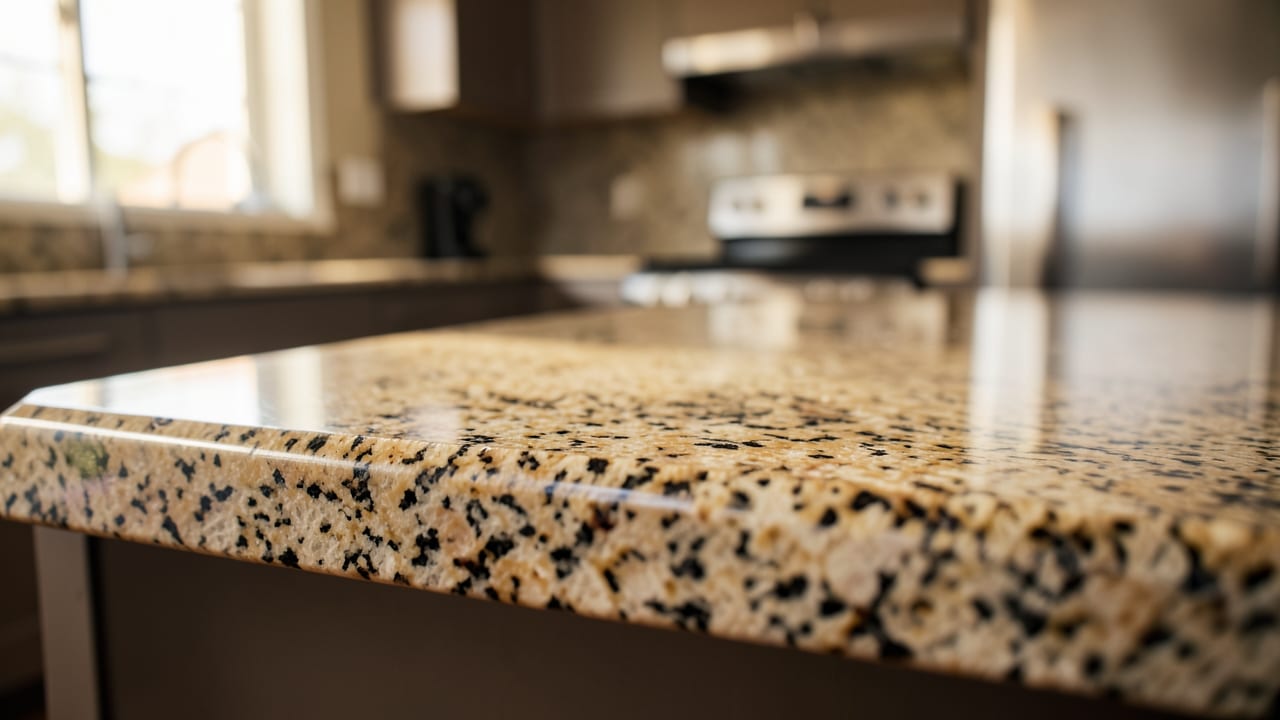
Stone Countertop Mold Removal
Professional removal of mold from stone countertops using specialized cleaning and treatment methods.
Mold on stone countertops in Santa Barbara homes—whether granite, marble, or quartz—requires professional removal to prevent spread and damage. Unlike porous materials, stone surfaces demand specialized cleaning methods that eliminate spores without harming the finish.
Proper remediation includes containment, HEPA filtration, and moisture control to address both visible growth and hidden sources, ensuring the job is done safely and effectively for your kitchen or bathroom.
We also handle Wood Furniture Mold Remediation and Metal Ductwork Mold Remediation for Santa Barbara properties.
When to call for stone countertop mold removal
Mold on stone countertops often starts as a small, discolored spot but can quickly spread if moisture persists.
Unlike wood or drywall, stone surfaces like granite or quartz don’t absorb mold the same way, but spores can embed in microscopic pores or cracks, making them harder to remove with household cleaners.
If you notice black, green, or white patches that won’t wipe away—or if the mold keeps returning after cleaning—it’s time for professional treatment.
Visible mold covering more than a few square inches is a clear sign the problem has gone beyond surface-level cleanup. In California, mold growth exceeding 25 contiguous square feet is typically considered beyond DIY solutions and requires licensed remediation (California Business and Professions Code §7048).
A musty smell with no visible mold often indicates hidden growth, especially in areas with poor airflow like windowless bathrooms or basements.
Signs Your Stone Countertop Needs Professional Mold Removal
- Mold covers more than a small, isolated patch (especially over 25 sq ft).
- The discoloration returns within weeks after cleaning with bleach or vinegar.
- You notice a musty smell with no visible mold in the room.
- The countertop feels damp or has condensation even when the room is dry.
- Mold appears in multiple spots or keeps spreading despite repeated cleaning.
What affects pricing and timeline for stone countertop mold removal
Pricing for stone countertop mold removal in Santa Barbara is project-specific, not based on a fixed rate per square foot.
The scope includes containment, HEPA air scrubbing, surface treatment, and clearance testing—but the final cost depends on factors like the size of the affected area, the type of stone, and whether hidden moisture sources need addressing.
For example, quartz requires different cleaning agents than marble, and sealing may be needed afterward to restore the finish.
Timing varies based on containment setup, drying requirements, and whether additional work (like refinishing or resealing) is needed. A small, contained job might take a single day, while larger or complex cases—especially those with structural moisture issues—can require multiple visits.
Always confirm whether the quote includes inspection, testing, and clearance verification, as these steps are critical but sometimes priced separately.
Why containment and clearance testing matter
During stone countertop mold removal, containment is critical to prevent spores from spreading to other parts of your home. Plastic sheeting and negative-air machines create a sealed work zone, ensuring disturbed spores stay inside rather than drifting through hallways or HVAC systems.
Without proper containment, a small job can quickly become a larger, more costly problem affecting multiple rooms.
Clearance testing—conducted by an independent lab after remediation—verifies that spore counts are back to normal levels. This step is often overlooked but essential, as it confirms the job was effective and reduces the risk of regrowth.
Skipping testing means you may not know if hidden mold remains or if moisture issues still need addressing.
A breach in containment—like an open door or torn plastic—can release spores into unaffected areas, turning a contained job into a full-home issue. Similarly, remediation without clearance testing leaves no proof the mold was fully removed, increasing the chance of recurrence.
How stone countertop mold removal works
This process targets embedded spores while protecting the stone’s finish and preventing cross-contamination.
- 1Containment Setup
Plastic sheeting seals off the work area, and negative-air machines create a vacuum to trap spores inside the containment zone. This prevents spores from spreading to other parts of your home during treatment.
- 2Specialized Cleaning
Stone-specific solutions break down mold without damaging the surface. Granite, marble, and quartz require different treatments to avoid etching or discoloration, and the countertop is scrubbed thoroughly to remove embedded spores.
- 3HEPA Filtration and Drying
HEPA air scrubbers run continuously to capture airborne spores, and surfaces are vacuumed with HEPA-equipped tools. Industrial dehumidifiers dry framing and subfloors to prevent moisture-related regrowth, as mold thrives in damp conditions.
- 4Clearance Testing
An independent lab tests air and surfaces post-remediation to confirm spore levels are back to normal. This step ensures the job was effective and identifies any lingering moisture issues that could cause recurrence.
- 5Prevention Recommendations
The crew advises on fixing moisture sources (like leaks or poor ventilation) and may suggest sealing the stone or using dehumidifiers in persistently damp areas to help the finish last longer.
Frequently asked questions
Can I use bleach or vinegar to clean mold off my stone countertop?
Bleach and vinegar can lighten surface mold but often fail to penetrate microscopic pores in stone, leaving spores to regrow. These cleaners can also damage sealed surfaces over time. For embedded mold, a professional-grade solution is more effective and safer for your countertop’s finish.
How do I know if the mold has spread beyond my countertop?
Check for discoloration on adjacent walls, cabinets, or backsplashes, and look for musty smells in nearby rooms. If the mold keeps returning after cleaning, it may have spread to hidden areas like subfloors or behind appliances, requiring a professional inspection.
Will my stone countertop need resealing after mold removal?
Some stone surfaces—especially granite or marble—may need resealing after treatment to restore protection against stains and future mold. The crew can assess whether this step is needed based on the stone type and condition.
How long should I stay out of the room during remediation?
You’ll typically be asked to vacate the area during containment and active cleaning, which can take several hours. The crew will advise when it’s safe to re-enter, usually after HEPA filtration and drying are complete.
Where Santa Barbara sits, and what the Census lists nearby
Santa Barbara sits in California, and the closest places listed in the U.S. Census Gazetteer are Mission Canyon (3.6 miles north), Montecito (4.7 miles east), Eastern Goleta Valley (4.9 miles northwest), Summerland (7.3 miles east).
Within 25 miles of Santa Barbara the same source lists 11 distinct incorporated places and census-designated places.
Those figures matter for stone countertop mold removal because they are straight-line distances between Census coordinate points: road mileage between Santa Barbara and Mission Canyon runs longer than the 3.6 miles shown, which is why quotes for the same job differ between towns that look close together on a map.
Source: U.S. Census Bureau Gazetteer.
See Meiners Oaks, CA for more, or find out about the full mold remediation lineup we run in Santa Barbara side by side for our complete lineup.
Ready to get started?
Talk to a local mold remediation pro in Santa Barbara — get a written quote.
Other Mold Remediation Services in Santa Barbara
Wood Furniture Mold Remediation in Santa Barbara, CA
Professional removal and treatment of mold from wood furniture to restore safety and appearance.
Learn More
Metal Ductwork Mold Remediation in Santa Barbara, CA
Professional removal of mold from metal ductwork to restore indoor air quality.
Learn More
Glass Window Mold Removal in Santa Barbara, CA
Professional removal of mold from glass windows and frames to restore clarity and prevent spread.
Learn More
Brick Masonry Mold Treatment in Santa Barbara, CA
Professional mold treatment and removal from brick masonry to restore structural integrity and indoor air quality.
Learn More
Sunroom Mold Remediation in Santa Barbara, CA
Professional removal and treatment of mold in sunrooms to restore a safe, clean space.
Learn More
Closet Mold Cleanup in Santa Barbara, CA
Professional cleanup and removal of mold from closets to restore safe, healthy spaces.
Learn MoreCommon Questions About Mold Remediation in Santa Barbara
Everything you need to know about mold remediation services in Santa Barbara
How much does Stone Countertop Mold Removal typically cost in Santa Barbara, CA?
Does coastal humidity around Santa Barbara, CA change how mold risk is assessed?
Is it safe to stay in the home during mold remediation?
Can small mold problems be handled without hiring anyone?
What's the actual difference between mold removal and mold remediation?
Is a final clearance test part of a typical mold remediation job?
Need Mold Remediation in Santa Barbara?
Connect with local providers in Santa Barbara for a detailed quote.
⏰ We answer your call • Serving all of Santa Barbara and surrounding areas